The opioid epidemic has affected communities across the country, leaving devastation behind in the form of addiction, deaths, incarceration, and more. While this epidemic has touched people from all walks of life, Black folks have disproportionately felt the blow. The intersection of systemic racism and socioeconomic disparities has exacerbated the toll on Black Americans. This includes residents right here in Allegheny County. So it’s critical to let the county know how they must address the opioid epidemic in Black communities.
Your Voice Matters to Address The Opioid Epidemic in Black Communities
The opioid epidemic has deeply impacted the Black community in Allegheny County.
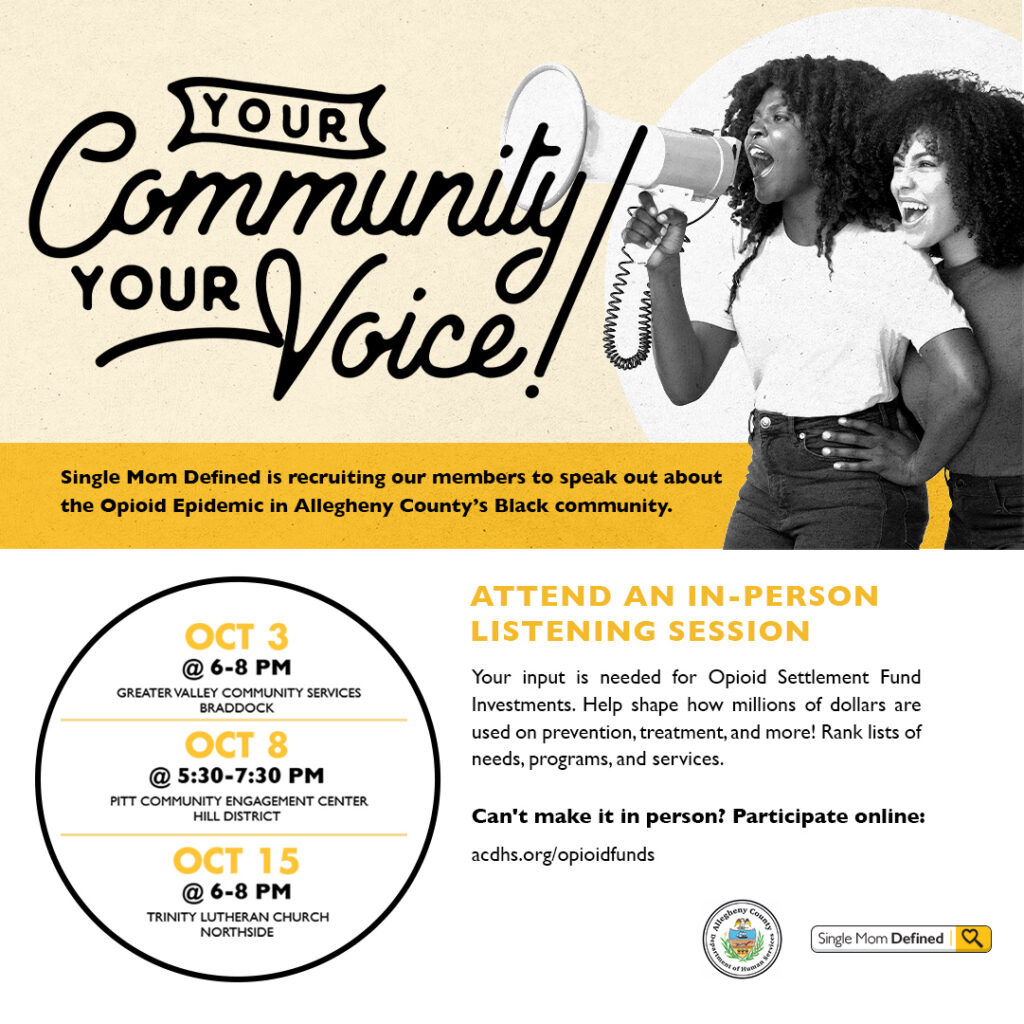
Allegheny County is asking residents to share their perspectives on the most effective ways to address this ongoing crisis.
The county will host a series of listening sessions in neighborhoods most affected by substance use and overdose deaths. During these meetings, residents will identify their most urgent needs and share ideas for programs and services. Participants will also help guide how Allegheny County should invest millions of dollars from national opioid settlement funds. These investments will support prevention, harm reduction, treatment and recovery, education, and research efforts.
The listening sessions will take place on the following dates:
- October 3, 2024 at 6 PM at the Greater Valley Community Services, Braddock
- October 8, 2024 at 5:30 PM at the University of Pittsburgh Community Engagement Center, Hill District
- October 15, 2024 at 6 PM at Trinity Lutheran Church, Northside
Organizers will serve refreshments. They will not offer child care.
You can register to attend listening sessions and participate in the survey by visiting engage.alleghenycounty.us.
The National Opioid Settlement Funds
Pennsylvania will receive $1 billion, with Allegheny County getting $90 million in annual payments, ranging from $4-10 million through 2038. To date, the county invested $8.3 million treatment and prevention efforts.
Systemic Factors
The current opioid crisis has reached unprecedented levels, fueled by the overprescription of opioids, synthetic opioids like fentanyl, and the illegal drug trade. SInce Black communities have historically faced systemic discrimination and marginalization, residents are at risk for higher rates of chronic diseases, limited access to quality healthcare, and exposure to environmental hazards. Such factors have made Black individuals more vulnerable to the opioid epidemic. Systemic racism has contributed to economic inequality, forcing many Black individuals to live in poverty and face limited opportunities for employment. These factors have increased the likelihood of turning to drugs as a coping mechanism.
The Role of Prescription Opioids
Initially, the opioid epidemic affected predominantly White communities, but in recent years, the country and the county experienced significant increases in opioid-related deaths among Black and Latinx residents. Since 2018, fatal overdose rates among Black residents in Allegheny County have tripled while rates among Whites have leveled off.
How the Opioid Epidemic Impacts Families
Sarah, a member of the Single Mom Defined community and resident of Allegheny county, can attest to how disparity in treatment and care led to her mother becoming addicted to opioids. Because of a lack of access to proper pain management, her mother fell victim to what she calls doctor shopping and illegal ways to get pain pills.
“Pharmaceutical junkie” was the name a family member nicknamed my mom before I was old enough to understand what that meant. For most of my life, my mom was addicted to opioids. Her addiction started when she was prescribed narcotic pain relievers.
My mom was given OxyContin when it was first introduced to the public. When I was 19, I had a serious injury and was hospitalized. My mom came to visit me, but kept dozing off, because she was so high from the pills. She was literally falling asleep mid sentence, but I was coherent, despite being on a morphine drip. She got to the point where she tried to find illegal ways to obtain the pills when she couldn’t get them from doctor shopping.
At one point, she was using other substances to feed her addiction. In 2019, my mom was gravely ill. Even after her body had started the process of transitioning, her brain was still craving the narcotics. Some of her last words were asking for pain pills. I believe more should have been done to help her and all those who became hooked on opioids as a result of being prescribed medication by a doctor. My siblings and I suffered because of our mother’s addiction. I had to rush my unconscious mother to the emergency room so many times that I lost count.
Sarah believes the settlement funds should be spent on treatment programs for those experiencing addiction and support programs for families impacted by the epidemic.
Children often lose their parents, even if they don’t die of an overdose. Children need resources set aside for counseling programs. The Center for Victims of Violent Crimes helps families with funeral expenses. We should also use funds to help cover funeral expenses when a loved one dies from an opioid addiction. We should invest in education, especially for first responders like police officers. And we should put money into programs that provide mental health care, because addiction is a mental health issue, and people with addiction disorders often face other mental health challenges as well.
How the Opioid Epidemic Impacts Relationships
Samantha, a member of the Single Mom Defined community and an Allegheny County resident, shared how the opioid epidemic hit close to home. We changed her name to protect the identity of her ex-partner.
In 2016, I reconnected with my first love from middle school. He was battling an addiction to opioids and wanted to get clean. I connected him to my church, which had a recovery program for people battling addiction. They assisted him right away and transferred him to an out-of-state location to start the process of detox. He was there for 30 days before he got kicked out for breaking a rule. When he returned to Pittsburgh to live with me, we did well in the first nine months of our relationship. Or so I thought. Once he had secured a job, enrolled in school, and was working on his parenting skills with his children’s mother.
When he landed a job at a restaurant and received a pay hike, things took a turn for the worse. He began smoking weed and drinking alcohol, which eventually led to him using opioids once again. He would steal my money, my car, my children’s electronics and disappear for days at a time.
I tried to be supportive but he became verbally and physically abusive. I begged him to stop using, and he threatened to inject me with opioids if I didn’t support him. At that moment, I decided that our relationship was not worth me losing everything I worked hard for. I put his belongings outside on my porch and changed the locks.
He lived in my backyard for three weeks until a relative came to get him. About six months later, he broke into my house and stole electronics and cash. I grew up in a drug-infested environment as a child, so I continuously blamed myself for exposing my children to danger. From that day on I decided to be single and focus on healing the damage done mentally to my children and mentally and physically to me.
Samantha wants officials to spend opioid settlement funds on educational programs that prevent opioid addiction.
I wish there was a way to prevent addiction. A lot of people turn to drugs and alcohol as a coping mechanism. I wish schools taught students healthy coping skills so that drug abuse would not lead to addiction.
The opioid epidemic is a complex and multifaceted issue that requires a coordinated effort from policymakers, healthcare providers, community leaders, and individuals to address its devastating consequences. By recognizing the unique challenges faced by Black communities in Allegheny County and implementing effective strategies, we can help reduce the impact of the opioid epidemic, rebuild current communities, and protect future generations against opioid abuse.
Unable to attend? You can still address the opioid epidemic in Black communities. Take the survey today and share how you think the county can fight this battle that is hitting home for many of our moms.